
Hevea Butcher Block: How It’s Made and Why People Choose It
Natural wood has a way of grounding a space. Among wood surfaces, Hevea butcher block stands out for its sustainability, warmth, and long-term value. But where does it come from, how is it made, and why do so many residential and commercial projects choose it over stone or synthetic materials?
Let’s walk through the full story, from tree to countertop.
What Is Hevea Unsolid Butcher Block?
Understanding Hevea Wood
Hevea wood comes from the rubber tree (Hevea brasiliensis). In countries like Vietnam, rubber trees are primarily grown for latex production. After about 20–25 years, when latex output naturally declines, the trees are harvested and replaced with new ones.
Instead of being discarded or burned, the wood is repurposed into furniture, flooring, and butcher block. This makes Hevea a renewable and environmentally responsible material.
What Does “Unsolid” Mean?
“Unsolid” butcher block refers to finger-jointed construction. Smaller wood pieces are precisely cut, interlocked, glued, and pressed together into a solid panel.
This process:
-
maximizes wood utilization
-
reduces waste
-
improves dimensional stability
-
minimizes warping and cracking
The result is a strong, consistent, and reliable surface ideal for daily use.
Is Hevea Butcher Block Sustainable?
Yes, and here’s why:
-
Renewable lifecycle – trees are replanted continuously
-
Byproduct usage – wood is harvested only after latex production ends
-
Lower environmental impact than mined stone or engineered surfaces
Unlike slow-growth hardwoods, Hevea wood reaches maturity faster and supports a circular agricultural economy.
From Tree to Countertop: The Making of Butcher Block

The process includes:
-
Rubber trees harvested after latex life
-
Logs cut into smaller lumber pieces
-
Kiln drying to control moisture and prevent movement
-
Finger-jointing and lamination under pressure
-
Precision sanding and finishing
From harvest to finished butcher block typically takes 2–4 months, depending on thickness and finish.
The Life Cycle of a Butcher Block
-
Tree planted and grown for latex
-
Latex harvested for decades
-
Tree repurposed into lumber
-
Fabricated into butcher block
-
Used for 10–30+ years
-
Refinished, resized, or recycled
This long life cycle is one reason butcher block is favored by sustainability-minded builders and homeowners.
Why Choose Butcher Block Over Other Materials?
Natural Warmth and Character
Each butcher block surface has subtle grain variation, giving kitchens and commercial spaces a warmer, more inviting feel than stone or laminate.
Repairable and Forgiving
Scratches, dents, and stains don’t mean replacement.
They can be sanded and refinished, extending the surface’s life for decades.
Gentle and Functional
Originally used in butcher shops, wood:
-
absorbs impact
-
protects knives
-
reduces noise
-
feels comfortable under daily use
Environmentally Responsible
Compared to quartz or stone, butcher block requires:
-
less energy to produce
-
no mining
-
fewer chemical binders
Applications in Residential and Commercial Projects
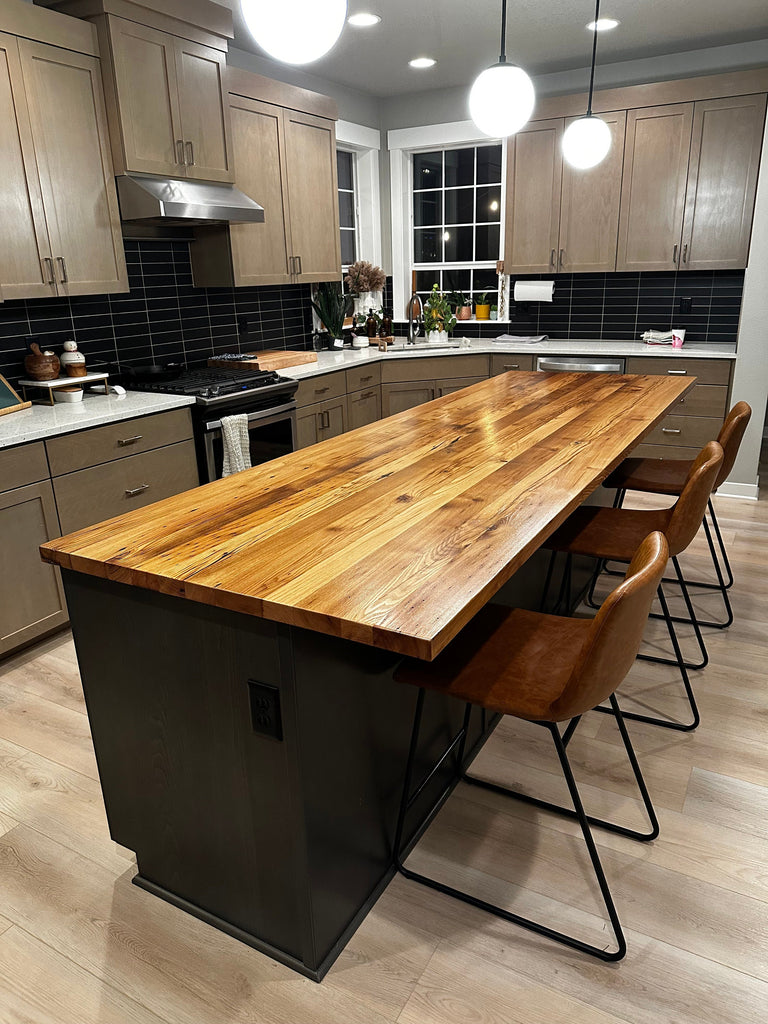
Residential Uses
-
Kitchen countertops and islands
-
Coffee bars and pantries
-
Laundry rooms
-
Home offices and desks
-
Open shelving and tabletops
Commercial Uses
-
Cafés and restaurants
-
Bakeries and food prep areas
-
Retail checkout counters
-
Community tables
-
Offices and co-working spaces
Butcher block pairs especially well with:
-
white shaker cabinets
-
industrial or farmhouse styles
-
concrete or tile floors
-
matte black or brass fixtures
Will Butcher Block Go Bad Over Time?
Not when properly maintained.
How It Ages
Butcher block develops a natural patina over time. Instead of degrading, it matures and gains character.
Simple Maintenance Guide
-
Apply food-safe mineral oil or hardwax oil
-
monthly for the first few months
-
then every 2–3 months
-
-
Wipe spills promptly
-
Avoid standing water
-
Use cutting boards for heavy chopping
-
Light sanding once a year if needed
Even after many years, butcher block can be refinished instead of replaced.